Ducted vs ductless — which type is right for you
Ducted (vented) chimneys push smoke, heat and grease outside through a pipe and are far more effective at clearing India's high-heat, masala-heavy cooking than ductless/recirculating (“plug-and-play”) models, which pass air through a charcoal filter and blow it back into the room. If you have a route to an outside wall or an existing exhaust hole, buy ducted — that's 10 of the 13 chimneys here. Only choose ductless when you genuinely cannot run a duct (many rentals, high-rise flats and interior kitchens).
Size: match the chimney to your hob, not your kitchen
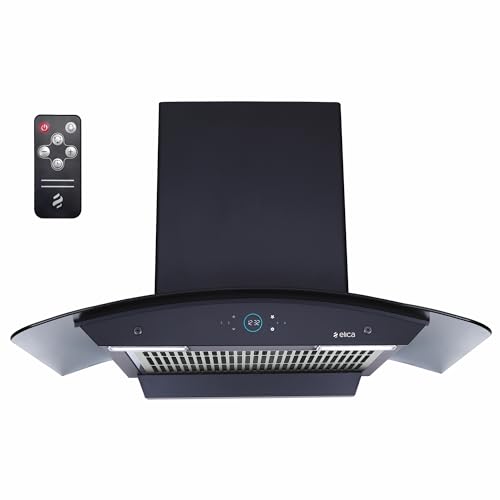
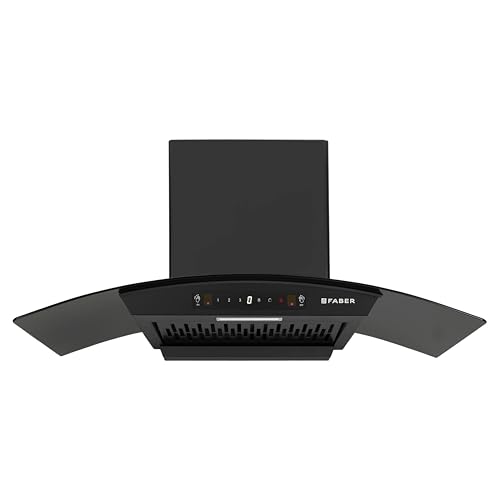
Pick 60 cm for a 2–3 burner cooktop and 90 cm for a 4-burner or wider hob — the chimney should be at least as wide as your cooktop. Many models are sold in more than one size (we've noted the full range for each): the Faber Venice and Hindware Amyra come in 60/75/90 cm, while the Elica BLDC and iSMART come in 60/90 cm. The size doesn't change the core design, so choose purely by burner count.
Suction (m³/hr): how much you actually need
For typical Indian cooking, aim for 1,200 m³/hr or more in a closed kitchen; 1,400–1,600 m³/hr is comfortable for heavy frying and tadka. Numbers above ~1,500 are mostly marketing headroom for most homes. Note that listed and rated figures sometimes differ (e.g. a “1,500” model rated at 1,425) — check the spec table, not just the title. Airflow figures on ductless models are best treated as relative, since the air never leaves the room.
BLDC vs Induction Motors: Noise, Power Draw and Whether the Premium Is Worth It
BLDC stands for brushless DC — a motor with no carbon brushes to wear down. Because it runs at inverter-style variable speed rather than a fixed AC speed, a BLDC chimney draws less power at lower settings, runs quieter, and typically carries the longest motor warranty in the category: the Elica WDFL 600 BLDC here is rated 48 dB and backed by 15 years on the motor, at the top of the 7–15 year range these chimneys span. The catch is price — BLDC models sit at the upper end, and only two chimneys in this list (the Elica WDFL 600 and the iSMART GLACE 90) use one. The premium is worth paying if your kitchen is open-plan or adjoins a living room, where running noise is what you notice daily; it is harder to justify in a closed kitchen where you run the chimney flat out anyway.
Baffle filter vs filterless: the maintenance trade-off
The big filter vs filterless question comes down to how much cleaning you're willing to do. Baffle-filter chimneys are excellent for oily Indian food and are cheaper, but you must remove and scrub the steel filters periodically. Filterless (auto-clean) chimneys have no filter to clean — grease collects in an oil cup you empty, and a heat auto-clean cycle burns off residue — so upkeep is lower, usually at a higher price. Both can be ducted, so pick based on how much cleaning you're willing to do.
The hidden costs: installation, duct pipe and service
Across every brand, verified buyers report that installation is NOT free and the duct pipe is often not in the box — budget roughly ₹1,500–2,800 extra for installation, wall drilling and pipe. Factor this into your real price. After-sales service quality varies a lot by brand and city and is the single most common complaint in this category; read recent local reviews before buying.
Noise and warranty
Chimneys are loud; rated figures run ~48–62 dB, and many buyers find real-world noise higher than the spec, so favour BLDC/inverter motors and quieter-rated models (the Elica BLDC and Crompton are the standouts) if noise matters. On warranty, most brands offer long motor cover (7–15 years) but much shorter comprehensive cover (1–5 years) on the body/PCB — the comprehensive period is what actually protects you early on.
Going ductless: what plug-and-play really means
The big advantage of a ductless chimney is installation: no core-cutting through the wall, no duct pipe, and often a 10-minute mount — ideal for renters who can't modify the kitchen and want to take the chimney along when they move. You still need a power socket nearby and a sturdy wall. Just set expectations: even a “1,400 m³/hr” ductless unit can't match a ducted chimney at removing heat and humidity, so keep a window or exhaust fan handy for heavy frying.
Budget for charcoal filter replacements (ductless only)
The charcoal/activated-carbon filter is what cleans recirculated air, and it saturates over time — plan to replace it periodically (typically every few months to a year depending on how much you cook). This is an ongoing cost unique to ductless chimneys, so factor it into total cost of ownership. Models with a longer filter-kit warranty (like the Elica Kitty's 5-year air-recycle kit) reduce this burden.