Beverages

Best Moka Pots in India (2026)

We compared 6 moka pots for Indian kitchens — brew strength, build, and gas vs induction compatibility — to find the best from ₹824 to ₹4,599.

By Founder, ChefPicks Updated:
~10 min read
We may earn a commission via Amazon.in affiliate links. Prices shown are indicative — check the retailer for current rates. This doesn't affect our reviews.

A moka pot is the cheapest honest route to espresso-strength coffee at home. There is no pump, no electricity and no ₹15,000 machine — just steam pressure pushing hot water up through a bed of ground coffee. What comes out is not technically espresso (a moka pot builds roughly 1.5 bar against an espresso machine's 9), but it is dark, concentrated and strong enough to build a proper latte on, and it costs under ₹1,000 to get started.

The catch in an Indian kitchen is the hob. Classic aluminium moka pots — including the iconic Bialetti Moka Express — do not work on induction at all without a separate adapter plate. If you cook on gas, that is irrelevant and aluminium is the cheaper, faster-heating choice. If you have moved to induction, you need a stainless steel body or an explicitly induction-rated pot, and that changes which picks make sense for you.

We evaluated the moka pots sold on Amazon.in and shortlisted six across every budget from ₹824 to ₹4,599, scoring each on brew strength, build quality, hob compatibility, ease of cleaning and value for money. Our assessment is based on manufacturer specifications and verified Amazon.in customer reviews — we do not physically test products. The result covers both aluminium and stainless steel, 2-cup solo brewers up to 4-cup pots, and Indian brands alongside the Italian originals.

Part of our complete coffee guide

Not sure which brewing method suits you?

Compare espresso, French press, moka pot & drip in our full Coffee Maker Buying Guide

Our Top Pick

Best Overall
Bialetti Venus Induction Stainless Steel Moka Pot (4 Cup)

Bialetti Venus Induction Stainless Steel Moka Pot (4 Cup)

The one Bialetti that works on an induction hob without an adapter plate

9.3
  • Stainless steel body — works on induction, gas and electric hobs
  • 4.5 stars across 41,000+ ratings
  • Genuine Bialetti, the brand that invented the moka pot in 1933
  • Steel resists the pitting that eventually claims aluminium pots
  • 4-cup size brews roughly one full mug of strong coffee

Best Moka Pots by Budget

Moka pots span a wide price range for what is mechanically the same device. Here is the best pick at each budget ceiling.

Best Under ₹1,000

AGARO Classic Moka Pot 240ml

AGARO Classic Moka Pot 240ml

₹824

1,481 ratings, a 1-year warranty and a 6-cup chamber — the cheapest pot here with real evidence behind it. Gas hobs only.

Best Under ₹2,000

InstaCuppa 2-in-1 Moka Pot 300ml

InstaCuppa 2-in-1 Moka Pot 300ml

₹1,799

The best-rated sub-₹2,000 pot at 4.3 stars, and one of very few at this price that works on induction as well as gas.

Best Under ₹5,000

Bialetti Venus Induction 4-Cup

Bialetti Venus Induction 4-Cup

₹4,599

Stainless steel, works on every hob type including induction, and holds 4.5 stars across 41,000+ ratings.

Quick Comparison

Comparison of 6 products by our rating, price and key specifications. The highest rating and the lowest price are highlighted.
ChefPicks RatingAmazonPriceMaterial
9.3
4.5/5 ₹4,599 Stainless Steel
Check Price
9.2
4.4/5 ₹3,399 Aluminium
Check Price
8.9
4.3/5 ₹1,799 Aluminium
Check Price
8.5
4.0/5 ₹2,050 Aluminium
Check Price
Lifelong Moka Pot 300ml Best for Filter Kaapi
8.4
4.2/5 ₹899 Aluminium
Check Price
8.3
4.1/5 ₹824 (lowest price) Aluminium
Check Price

How We Rated These Products

Scores are based on manufacturer specifications, verified Amazon.in customer reviews, brand track record and value for Indian buyers. We do not physically test the products we review.

Scored out of 10
  • Brew Strength & Quality 30%

    Chamber design, safety-valve pressure, filter fit and what owners report about body and crema in the cup

  • Build & Durability 25%

    Body material, gasket quality, handle construction and reported longevity in owner reviews

  • Hob Compatibility 20%

    Whether the pot works on gas, electric and induction — the single biggest practical constraint in an Indian kitchen

  • Ease of Use & Cleaning 15%

    Handle comfort and heat resistance, spout control, how easily the pot disassembles and washes

  • Value for Money 10%

    Price relative to material, capacity, warranty and brand support compared to the rest of the field

Detailed Reviews

Bialetti Venus Induction Stainless Steel Moka Pot (4 Cup)

Best Overall

The Bialetti you buy if your kitchen has moved to an induction hob

Our Rating

9.3

₹4,599

Check Price

Specifications

Brand Bialetti
Material Food-grade Stainless Steel
Capacity 4 cups (approx. 170ml)
Available Sizes 2, 4, 6 and 10 cup
Hob Compatibility Induction, gas and electric
Handle Heat-resistant, ergonomic
Safety Valve Yes
Amazon Rating 4.5★ (41,007 ratings)

Pros

  • Stainless steel body works on induction without an adapter plate
  • 4.5 stars across 41,000+ ratings — the highest score in this roundup
  • Steel does not pit or oxidise the way aluminium does over years of use
  • Genuine Bialetti, the brand that created the moka pot in 1933
  • 4-cup size fills roughly one large mug or two small ones
  • Available in 2, 4, 6 and 10 cup sizes if you need more or less

Cons

  • ₹4,599 is the highest price here — more than five times the budget pick
  • Steel heats more slowly than aluminium, so brews take slightly longer
  • Most of the 41,000 ratings are global rather than India-specific
  • Purists argue aluminium gives a rounder flavour than steel

Rating Breakdown

Brew Strength & Quality 9.2
Build & Durability 9.6
Hob Compatibility 10.0
Ease of Use & Cleaning 9.0
Value for Money 8.0

Our Verdict

The Venus solves the one problem that makes most moka pots useless in a modern Indian kitchen: it is stainless steel, so it sits on an induction hob and works, no adapter plate required. It also works on gas and electric, which means it is the one pot here that will survive a kitchen renovation. Owners rate it 4.5 stars across 41,000+ ratings — the strongest reputation in this roundup — and reviewers consistently note that the steel body still looks new after years, where aluminium pots dull and pit. The trade-offs are real: at ₹4,599 it costs more than five times the AGARO, steel takes longer to come up to temperature than aluminium, and moka traditionalists will tell you aluminium tastes rounder. If you cook on gas and want the cheapest good pot, buy elsewhere on this page. If you have induction, this is effectively the only premium answer.

Bialetti Moka Express Stovetop Espresso Maker (3 Cup)

Best Classic

The 1933 original — 103,000+ ratings, made in Italy, and gas-only

Our Rating

9.2

₹3,399

Check Price

Specifications

Brand Bialetti
Material Aluminium
Capacity 3 cups (approx. 130ml)
Available Sizes 1, 3, 6, 9 and 12 cup
Hob Compatibility Gas and electric (induction plate required)
Country of Origin Italy
Design Alfonso Bialetti, 1933
Amazon Rating 4.4★ (103,203 ratings)

Pros

  • The single most-reviewed moka pot in the world — 103,000+ ratings at 4.4 stars
  • Genuinely made in Italy, not a licensed copy
  • Aluminium heats fast, so a brew is done in roughly 4-5 minutes on gas
  • Sold in India by an authorised Bialetti distributor, so warranty claims work
  • Spare gaskets and filter plates are widely available for it
  • The design has been in continuous production since 1933 — parts and knowledge are everywhere

Cons

  • Will not work on an induction hob without Bialetti's separate induction plate
  • Aluminium must not go in the dishwasher — rinse with water only
  • ₹3,399 buys a lot more pot from Indian brands if heritage does not matter to you
  • 3-cup size is small: roughly one mug, not a pot for guests

Rating Breakdown

Brew Strength & Quality 9.5
Build & Durability 9.2
Hob Compatibility 7.5
Ease of Use & Cleaning 9.2
Value for Money 8.5

Our Verdict

This is the pot everyone pictures when they hear "moka" — Alfonso Bialetti's 1933 design, still made in Italy, still shaped like an octagon so the flame wraps the base evenly. With 103,203 ratings at 4.4 stars it is the most-reviewed coffee device in this entire cluster, and owners overwhelmingly describe a rich, crema-topped brew that aluminium delivers faster than steel. It is also sold in India through an authorised Bialetti distributor, which matters because the market is full of look-alikes. The hard limitation is induction: aluminium is not magnetic, so unless you buy Bialetti's induction plate separately, this pot is for gas and electric hobs only. It also must never see a dishwasher — Bialetti's own instruction is to rinse with water alone, because detergent strips the seasoned interior that carries the flavour. Buy this if you cook on gas and want the real thing; buy the Venus above if you are on induction.

InstaCuppa 2-in-1 Moka Pot Espresso Maker (300ml)

Best Mid-Range

Induction-rated at under ₹2,000 — the practical middle of this field

Our Rating

8.9

₹1,799

Check Price

Specifications

Brand InstaCuppa
Material Premium Aluminium
Capacity 300ml (4-6 espresso cups)
Hob Compatibility Gas and induction
Handle Cool-touch
Spout V-shaped, drip-controlled
Finish Black
Amazon Rating 4.3★ (977 ratings)

Pros

  • Explicitly rated for induction as well as gas — rare at this price
  • 4.3 stars, the best rating of any sub-₹2,000 pot here
  • 300ml brews 4-6 espresso cups, more than the 3-cup Bialetti
  • Cool-touch handle and V-spout make pouring cleaner
  • Wide mouth is genuinely easier to fill and scrub than narrow-necked pots
  • InstaCuppa has an established India presence and after-sales channel

Cons

  • Aluminium body will not last as long as the stainless steel Venus
  • 977 ratings is a modest sample next to Bialetti's six figures
  • Black coating can scuff with abrasive scrubbing
  • Amazon listing copy is heavily gift-marketed, which tells you little about the product

Rating Breakdown

Brew Strength & Quality 8.8
Build & Durability 8.5
Hob Compatibility 9.5
Ease of Use & Cleaning 9.2
Value for Money 9.0

Our Verdict

If the Venus is too expensive but you are on induction, this is the pot that solves the same problem for ₹2,800 less. InstaCuppa rates it for both gas and induction, and at 4.3 stars across 977 ratings it holds the best score of anything under ₹2,000 in this roundup. The 300ml chamber brews 4-6 espresso cups, comfortably more than the 3-cup Bialetti, and owners repeatedly single out the cool-touch handle and the V-shaped spout as the difference between a clean pour and a burnt thumb. The compromise is material: this is aluminium with a black coating, so it will not outlive a steel pot, and the coating scuffs if you attack it with a scourer. For most Indian buyers wanting induction compatibility without the Bialetti premium, it is the sensible middle.

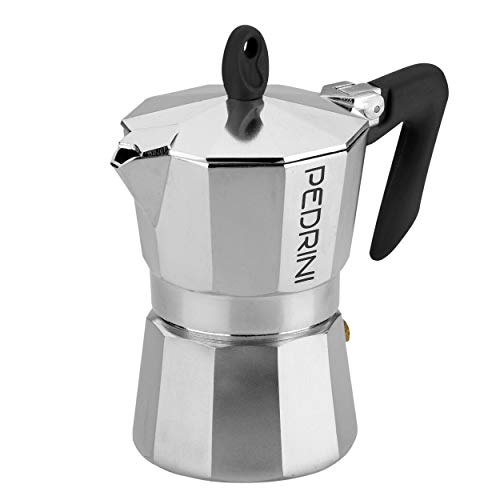
PEDRINI Italy Aluminium Moka Pot (3 Cup)

An Italian house since 1941 — proper heritage build, gas hobs only

Our Rating

8.5

₹2,050

Check Price

Specifications

Brand PEDRINI
Material Food-grade Aluminium
Capacity 3 cups (90ml)
Available Sizes 3 cup (90ml), 6 cup (150ml)
Hob Compatibility Gas and electric
Handle Heat resistant to 210°C
Gasket Food-grade silicone
Country of Origin Italy
Amazon Rating 4.0★ (4,540 ratings)

Pros

  • Pedrini has made Italian kitchenware since 1941 — real heritage, not a badge
  • Food-grade silicone gasket lasts longer than the rubber ones on cheap pots
  • Handle rated to 210°C, so it stays safe over a high gas flame
  • 4,540 ratings is a solid India-relevant sample
  • Available in a 6-cup 150ml size if 90ml is too small

Cons

  • 4.0 stars is the lowest rating in this roundup
  • No induction compatibility
  • 90ml for 3 cups is small — barely half a mug
  • ₹2,050 is more than the better-rated InstaCuppa at ₹1,799
  • Only one product image on the listing, so you are buying partly blind

Rating Breakdown

Brew Strength & Quality 8.6
Build & Durability 8.8
Hob Compatibility 7.5
Ease of Use & Cleaning 8.8
Value for Money 8.0

Our Verdict

Pedrini is the quieter Italian name — a Bergamo kitchenware house operating since 1941, and the pot reflects that: food-grade aluminium, a silicone gasket rather than cheap rubber, and a handle rated to 210°C so it will not soften over a full gas flame. At 4,540 ratings it has a meaningful review base. The problem is arithmetic. It scores 4.0 stars, the lowest here, it costs ₹2,050, and the InstaCuppa above it does induction as well as gas, holds 4.3 stars and costs ₹251 less. Its 3-cup size is also genuinely small at 90ml — barely half a mug. Choose it if you specifically want an Italian-made aluminium pot for a gas hob and the Bialetti is out of budget; otherwise the pot above is the better buy.

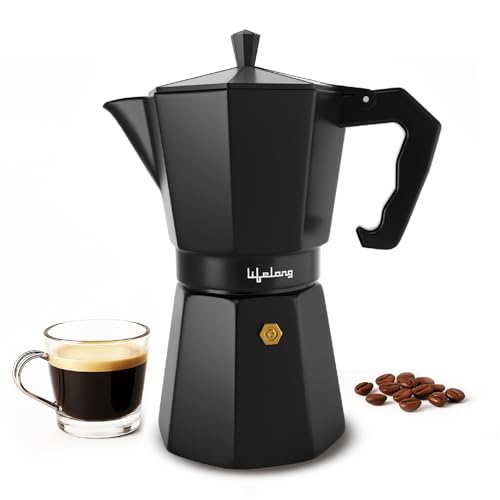
Lifelong Moka Pot Coffee Maker (300ml, 6 Cup)

Best for Filter Kaapi

Induction-compatible under ₹1,000 and built with filter kaapi in mind

Our Rating

8.4

Specifications

Brand Lifelong
Material High-grade Aluminium
Capacity 300ml (6 cups)
Hob Compatibility Gas, electric and induction
Handle Cool-touch
Intended Use Espresso and South Indian filter kaapi
Amazon Rating 4.2★ (137 ratings)

Pros

  • Induction-compatible for under ₹1,000 — the cheapest pot here that manages it
  • Explicitly designed around South Indian kaapi as well as espresso
  • 300ml / 6-cup capacity, larger than the ₹3,399 Bialetti
  • Cool-touch handle at a price where most pots have bare metal
  • Lifelong is an established Indian brand with a real service network
  • Light enough to travel with

Cons

  • Only 137 ratings — by far the thinnest review base in this roundup
  • Aluminium at this price will not match the Bialetti's longevity
  • A recent listing, so long-term durability reports do not exist yet
  • Kaapi grind is finer than moka grind and can clog the filter if you overfill

Rating Breakdown

Brew Strength & Quality 8.3
Build & Durability 7.8
Hob Compatibility 9.5
Ease of Use & Cleaning 8.5
Value for Money 9.3

Our Verdict

This is the most India-specific pot in the roundup. Lifelong markets it for South Indian filter kaapi as much as for espresso, and unlike almost everything else under ₹1,000 it is rated for induction alongside gas and electric. At ₹899 for 300ml, it holds more coffee than the ₹3,399 Bialetti and costs a quarter as much. The honest caveat is the review base: 137 ratings at 4.2 stars is thin, the listing is recent, and nobody has owned one long enough to report how the aluminium holds up after three years. One practical note if you are brewing kaapi — filter coffee powder is ground finer than moka grind, so pack it loosely and never tamp it, or you will choke the filter and trip the safety valve. As a low-risk way to find out whether moka brewing suits you at all, it is the best-value entry here.

AGARO Classic Moka Pot Stovetop Espresso Maker (240ml)

Best Budget

The cheapest credible way in — 1,481 ratings and a 1-year warranty

Our Rating

8.3

Specifications

Brand AGARO
Material Premium-grade Aluminium
Capacity 240ml (6 cups)
Hob Compatibility Gas only — not for induction
Handle Temperature resistant
Safety Valve Yes, pressure release
Warranty 1 year
Amazon Rating 4.1★ (1,481 ratings)

Pros

  • ₹824 — the lowest price here by some margin
  • 1,481 ratings at 4.1 stars, a far more solid sample than most budget pots
  • 1-year warranty, which almost nothing else at this price offers
  • 240ml / 6-cup capacity is generous for the money
  • AGARO is already a known Indian kitchen-appliance brand with service support
  • Owners report a full brew in around 5 minutes

Cons

  • Gas hobs only — the manufacturer explicitly states it is not for induction
  • Aluminium body and a budget gasket will need replacing sooner than a Bialetti's
  • 4.1 stars is mid-pack; a minority of reviews mention gasket fit
  • No dishwasher use — aluminium needs a plain water rinse

Rating Breakdown

Brew Strength & Quality 8.2
Build & Durability 7.8
Hob Compatibility 7.0
Ease of Use & Cleaning 8.6
Value for Money 9.5

Our Verdict

At ₹824 this is the cheapest pot we would actually recommend, and the thing that separates it from the ₹500 no-name listings is evidence: 1,481 ratings at 4.1 stars, a named Indian brand with a service network, and a 1-year warranty that almost nothing else at this price carries. The 240ml chamber serves six espresso cups and owners report a complete brew in about five minutes. The limitation is stated plainly by AGARO themselves — it works on all gas stovetops and is not for induction use. So this is the pick for a gas kitchen on a tight budget, and the wrong pick entirely if you have moved to induction, in which case spend ₹75 more on the Lifelong above.

Buying Guide

Induction or Gas? Decide This First

This is the question that eliminates half the market, and it catches most Indian buyers out. A moka pot heats by sitting directly on the hob, and an induction hob only heats magnetic metal. Aluminium is not magnetic — so an aluminium moka pot, including the iconic Bialetti Moka Express, simply will not work on induction. Nothing happens.

If you cook on gas, you have the full field. Aluminium is the traditional choice, heats faster, and is cheaper — the AGARO at ₹824 and the Bialetti Moka Express at ₹3,399 sit at opposite ends of the same category.

If you cook on induction, you need either a stainless steel body (the Bialetti Venus) or an aluminium pot the manufacturer explicitly rates for induction with a magnetic base plate (the InstaCuppa and the Lifelong). Bialetti also sells a separate induction adapter plate that lets an aluminium pot work on induction, but it adds cost and slows the brew, so buying the right pot first is simpler.

What '3 Cup' Actually Means

Moka pot sizing is the most misleading spec in coffee, and it disappoints a lot of first-time buyers. A 'cup' on a moka pot means an Italian espresso cup — roughly 30-40ml — not a mug.

So a 3-cup Bialetti produces about 130ml total. That is one small mug of strong coffee, or two shots to build lattes on. A 6-cup pot gives you around 300ml, which is two decent mugs. If you are buying for one person who drinks one large coffee a morning, a 3-cup pot is the minimum and a 6-cup is more comfortable. If two people drink coffee at the same time, start at 6-cup.

One rule that is not negotiable: a moka pot must be filled to its rated capacity to brew correctly. You cannot make one cup in a six-cup pot — the pressure and extraction will be wrong. Buy for your usual serving, not your largest.

Aluminium vs Stainless Steel

Aluminium is the original material and still what most moka pots are made from. It conducts heat faster, so brews finish quicker, it costs less, and many drinkers insist it gives a rounder, softer cup. The downsides: it cannot go in a dishwasher, it must be rinsed with plain water rather than detergent, and over years it dulls and can pit. It is also not induction-compatible.

Stainless steel costs more and heats more slowly, but it is dishwasher-safe, it resists corrosion, it still looks presentable after a decade, and it works on induction. In Indian kitchens — where humidity is high and hobs vary — steel is the lower-maintenance choice if you can absorb the price.

On aluminium safety: cookware-grade aluminium moka pots have been in continuous use for over ninety years and food-grade aluminium is permitted for cookware under Indian food-safety regulation. The practical reason to rinse rather than scrub is flavour and finish, not toxicity.

Getting the Grind Right

Grind size is what separates a good moka brew from a bitter one, and it is the most common mistake.

You want a medium-fine grind — finer than what you would use in a French press, noticeably coarser than true espresso grind. Espresso-fine powder packs too densely, chokes the filter, drives pressure up and produces a burnt, bitter cup, sometimes tripping the safety valve.

Two India-specific notes. South Indian filter coffee powder is ground very fine and often blended with chicory; it works in a moka pot but you must fill the basket loosely and never tamp it. And if you are buying beans from Chikmagalur, Coorg or Araku, ask for a moka or 'stovetop' grind specifically — most Indian roasters know the setting.

Fill the filter basket level and flat. Do not press it down. Tamping is an espresso-machine technique and it is actively wrong here.

Brewing Without Ruining It

A moka pot is simple but unforgiving of three things.

Use hot water in the base. Filling with hot (not boiling) water means the pot spends less time on the flame, so the grounds are not slowly roasted from below while the water comes up to temperature. This is the single change that most improves a bitter brew.

Keep the flame low and never past the base. On an Indian gas burner the flame will easily lick up the sides of a small pot and scorch the handle. Use the smallest burner on a low setting.

Take it off the heat when it starts to gurgle. That splutter means the water is exhausted and steam is now passing through the grounds — everything extracted after that point is bitter. Some people run the base under a tap to stop extraction immediately.

Finally: fill water only to below the safety valve, never above it. That valve is the pressure release, and blocking it is the one genuine safety risk with a moka pot.

Warranty, Spares and After-Sales in India

Moka pots have two consumable parts — the silicone or rubber gasket and the filter plate — and both wear out. A gasket typically needs replacing every one to two years with daily use; a leaking or hissing pot almost always means a flattened gasket rather than a dead pot.

This is a real advantage for Bialetti in India: because the Moka Express has been in production since 1933 and is sold here through an authorised distributor, replacement gaskets and filter plates are easy to find on Amazon.in. Indian brands like AGARO and Lifelong have service networks and warranties (AGARO offers one year on the Classic), but sourcing a specific spare gasket for a less common model is harder.

For no-name imports at ₹500-600, assume no spares are available at all — when the gasket goes, the pot goes. That is the practical argument for spending ₹824 on the AGARO rather than ₹569 on an unbranded listing.

Frequently Asked Questions

Is moka pot coffee the same as espresso?
No, though it is the closest you can get without a pump machine. A moka pot builds roughly 1.5-2 bar of pressure; a true espresso machine builds around 9 bar. The result is strong and concentrated with a light crema, but it lacks the dense body and thick crema of real espresso. For most people the difference matters less than the price gap — a moka pot costs under ₹1,000 where an entry home espresso machine starts around ₹10,000. If you want genuine espresso and milk-based drinks, buy the machine; if you want strong black coffee or a base for lattes, the moka pot does the job.
Will an aluminium moka pot work on my induction stove?
No. Induction hobs only heat magnetic metal, and aluminium is not magnetic — an aluminium moka pot placed on an induction hob will do nothing at all. You have three options: buy a stainless steel pot such as the Bialetti Venus, buy an aluminium pot the manufacturer explicitly rates for induction (the InstaCuppa and Lifelong here both have magnetic base plates), or buy a separate induction adapter disc that sits between the hob and the pot. The adapter works but adds cost and slows the brew, so it is usually simpler to buy the right pot.
How many cups does a '3-cup' moka pot actually make?
About 130ml in total — roughly one small mug. A moka pot 'cup' is an Italian espresso cup of 30-40ml, not a mug. A 6-cup pot makes around 300ml, which is two reasonable mugs. Buy at least a 3-cup pot for one person, and a 6-cup pot if two of you drink coffee at the same time. Note that you cannot brew a partial pot — a moka pot has to be filled to its rated capacity to extract properly.
Can I use South Indian filter coffee powder in a moka pot?
Yes, and it works well — the flavour is closer to traditional kaapi decoction than you might expect. The one adjustment is packing. Filter coffee powder is ground much finer than moka grind and is often blended with chicory, so fill the basket loosely, level it off and never tamp it down. Packing it tight will choke the filter, spike the pressure and give you a bitter cup or trip the safety valve. The Lifelong pot in this roundup is specifically marketed for kaapi as well as espresso.
Why does my moka pot coffee taste bitter?
Almost always one of three causes. First, the grind is too fine — moka wants medium-fine, coarser than espresso grind. Second, the heat is too high; use the smallest burner on a low flame so the pot is not scorched. Third, you left it on the heat too long — the moment it starts gurgling, the water is exhausted and everything extracting after that is bitter, so pull it off immediately. A fourth fix that helps a lot: start with hot water in the base chamber rather than cold, so the grounds spend less time heating.
How long does a moka pot last?
The body will outlast you if you look after it — Bialetti pots routinely stay in service for decades, and stainless steel ones longer than aluminium. What wears out are the two consumables: the gasket and the filter plate. Expect to replace the gasket every one to two years with daily use. If your pot starts hissing or leaking steam from the join, that is a flattened gasket, not a broken pot, and a replacement costs a couple of hundred rupees. Buy a brand whose spares are actually available in India — this is where Bialetti has a clear edge.
Can I make cappuccino or latte with a moka pot?
Yes, as the coffee base. A moka pot gives you a concentrated shot strong enough to stand up to milk, which is exactly what a latte or cappuccino needs. What it cannot do is steam the milk — there is no steam wand. You will need a separate milk frother, which starts around ₹500 for a handheld model. A moka pot plus a frother is the cheapest credible route to café-style milk drinks at home, at well under a quarter the cost of an espresso machine.
Moka pot or French press — which should I buy?
They make genuinely different coffee. A moka pot produces a small, concentrated, espresso-like shot under pressure; a French press steeps grounds in hot water and gives you a larger, fuller-bodied, less intense cup. Buy a moka pot if you want strong black coffee or a base for lattes. Buy a French press if you want a full mug to sip, if you also brew loose-leaf chai, or if you want the cheapest possible entry — presses start under ₹500. The two cost about the same at the budget end, so the choice is about the cup you want, not the money.

Our Verdict

For most Indian buyers the decision comes down to your hob, not your budget. If your kitchen runs on induction, the Bialetti Venus Induction 4-Cup at ₹4,599 is the pot to buy — stainless steel, works on every hob type, 4.5 stars across 41,000+ ratings, and it will still look and work well in ten years. If ₹4,599 is too much for a device with no moving parts, the InstaCuppa 2-in-1 at ₹1,799 does the same induction job for ₹2,800 less, with the trade-off that aluminium will not last as long.

If you cook on gas, the field opens up and the honest answer is that you do not need to spend much. The AGARO Classic at ₹824 brews six cups, carries a one-year warranty and has 1,481 ratings behind it — it is the cheapest pot here we would put our name to, and it is enough to find out whether moka brewing suits you. If it does and you want the real thing, the Bialetti Moka Express at ₹3,399 is the 1933 original, made in Italy, and the pot every other moka pot on this page is imitating.

One last note on where a moka pot sits. It is not an espresso machine and it will not froth milk. What it is, is the only way to get genuinely espresso-strength coffee at home for under ₹1,000, with nothing to break and nothing to service. Pair it with a milk frother and you have covered most of what a café can do, for less than a tenth of what a machine costs.

Sources & References

Health, safety and cost claims in this guide are backed by the authoritative sources below.

  1. 1.Moka Express — Product Information and Care Instructions — BialettiManufacturer guidance on induction compatibility, cleaning without detergent and cup sizing
  2. 2.Food Safety and Standards (Packaging) Regulations — FSSAIIndian regulation covering food-grade materials, including aluminium used in cookware
  3. 3.Indian Standards for Aluminium Utensils — Bureau of Indian Standards (BIS)Reference for food-grade aluminium specifications applicable to stovetop cookware

About the Author

Naveen Bhavnani, Founder, ChefPicks

— Founder, ChefPicks

Naveen Bhavnani founded ChefPicks to cut through the noise around kitchen-appliance buying in India. His work is research and analysis — comparing specs, pricing, warranties and real buyer feedback across every category to surface the picks that are genuinely worth your money.

More about our team → LinkedIn →

Bialetti Venus Induction Stainless Steel Moka Pot (4 Cup)

Best Overall

Bialetti Venus Induction Stainless Steel Moka Pot (4 Cup)

₹4,599

Check Price